

/compliance-rosette-check.svg)









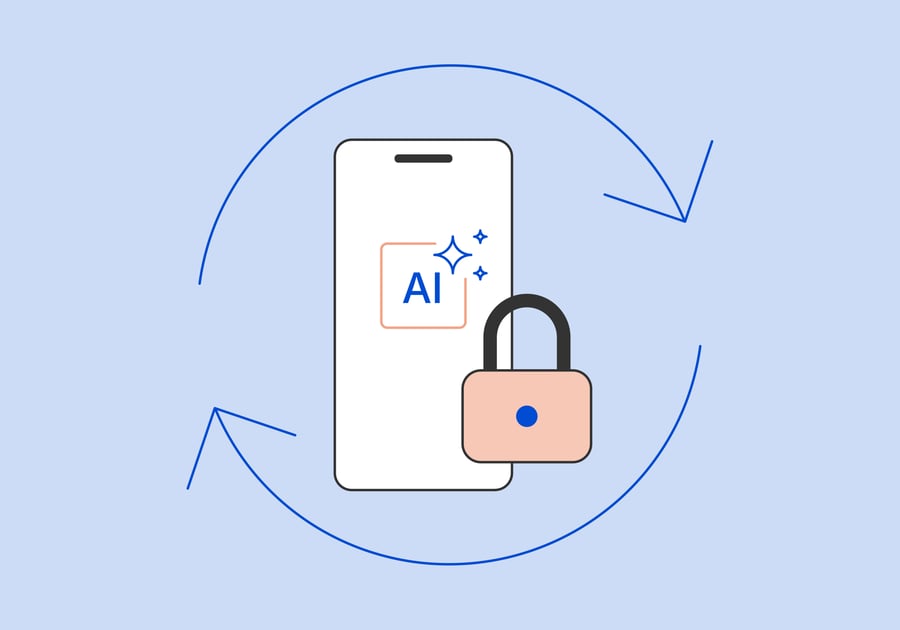
Generative AI is moving into mobile apps for good reasons. Teams want lower latency, stronger privacy, offline capability, and more relevant user experiences without sending every interaction back to the cloud.
That shift changes the security model.
When inference, natural language prompts, and decision logic move locally, onto the device, the mobile app is no longer a front end. It has become part of the execution environment for the intelligence itself. And mobile apps may not run in a trusted environment. They run on devices that can be rooted or jailbroken. They can be instrumented, tampered with, repackaged, and emulated.
So, the future of on-device GenAI won't be shaped by model quality alone. It will also be shaped by whether teams can protect the intelligence where it runs.
Why hybrid execution changes the mobile AI security model
For years, many teams could treat the mobile app as a thin client. Sensitive logic stayed on the backend. Core controls were enforced server-side. The app handled presentation, input, and communication.
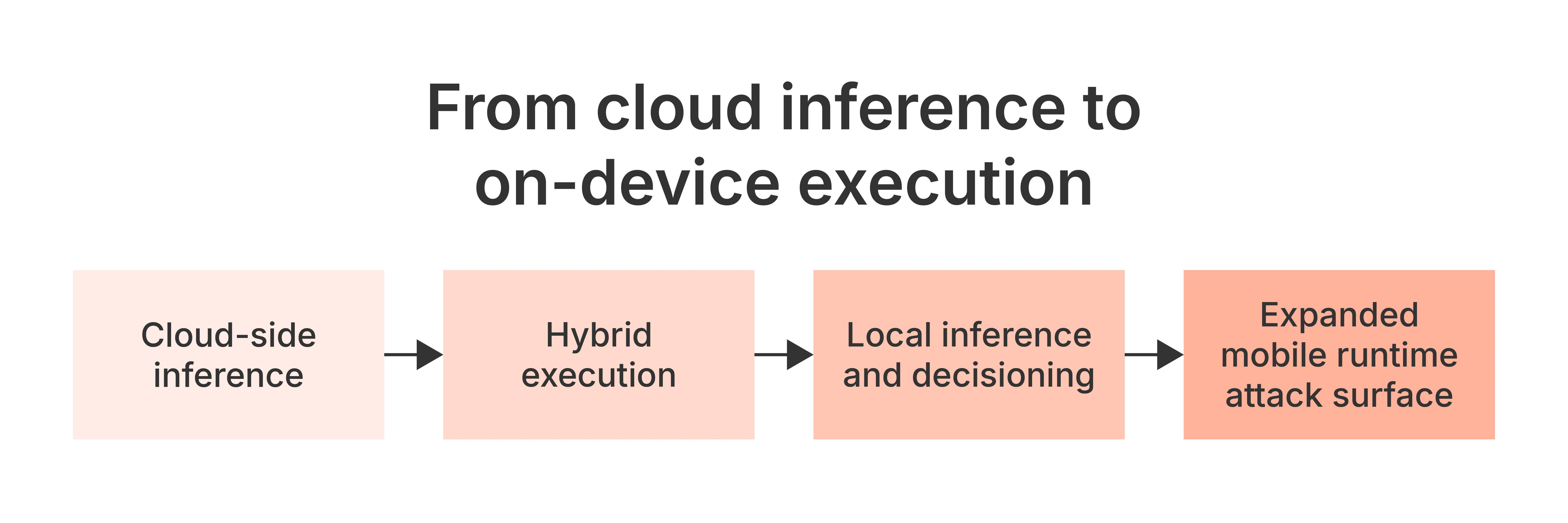
In a hybrid execution model, some AI tasks still run in the cloud. But more of the intelligence can run locally. That may include inference, personalization, ranking, guardrails, response orchestration, or entitlement logic tied to user actions. In some cases, the app may also hold model artifacts, prompt structures, policy logic, or workflow rules that shape how the feature behaves, so server-side controls are no longer enough on their own.
Once part of the trust boundary moves onto the device, part of the risk moves with it. And on mobile, local execution means exposed execution. Attackers don't need to break the whole system to create damage. They may only need to alter one output, bypass one security control, or manipulate one decision point at runtime.
The model is valuable IP, often bundled with product logic, policy logic, and proprietary secrets. Once that intelligence sits inside the app, it becomes a direct target.
Read more: Emerging threats in mobile AI: What businesses need to know
What attackers will target in on-device AI apps
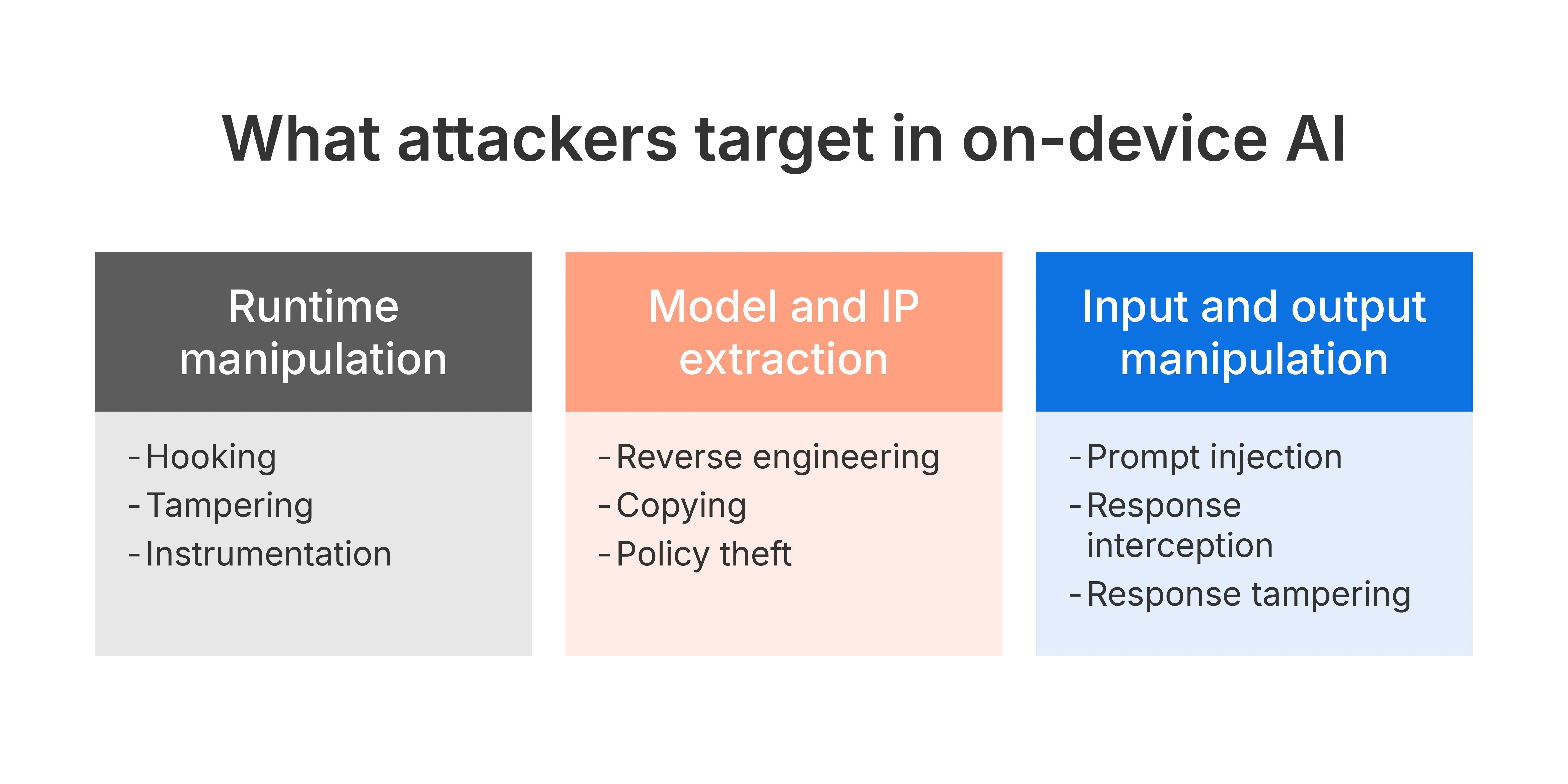
The threat model for on-device GenAI follows the same hostile conditions mobile apps already face today. The difference is that there is now more value in the runtime environment, and more damage can be done if that runtime is compromised.
Learn more: AI security threat model: A comprehensive approach
Runtime manipulation of AI behavior
If an attacker can instrument or tamper with the app at runtime, they may be able to manipulate AI processing. That can mean altering prompts before they reach the model, bypassing local guardrails, changing outputs before they are displayed, or modifying how the app interprets model responses.
This matters because many mobile AI features do more than generate content. They influence recommendations, approvals, entitlements, moderation, and next-step decisions inside the app. Once that behavior can be manipulated in the runtime, the risk moves from poor output quality to fraud, guardrail bypass, and loss of trust.
Model and IP extraction
If model weights, prompt structures, policies, or related logic are present in the app, attackers have a path to inspect and extract them. For some teams, that means exposing differentiated IP. For others, it means revealing internal rules that were never meant to be visible outside the product.
A copied model or stolen system prompt also helps adversaries move faster. It gives them a cheaper way to replicate functionality and a better way to test attacks offline before coming back with a more precise exploit.
Input and output manipulation
The third risk area is trust around the model interaction itself.
Attackers may use prompt injection attacks and other crafted inputs to steer the feature into unsafe or unintended behavior, especially where prompt validation or safety logic sits on the client side. They may also intercept or alter outputs before those outputs trigger another action in the app.
This gets serious in regulated industries like banking and healthcare, where AI output affects money, access, identity, privacy, or safety. In those flows, protecting the model alone isn't enough. Teams also need to protect the path into the model and the path out of it.
Read more: Why prompt injection attacks are the emerging critical risk in mobile app security
Agentic AI on mobile raises the stakes for runtime integrity
The next phase of mobile AI will move beyond answering questions. It will guide workflows, shape recommendations, support approvals, influence moderation, and in some cases trigger actions inside rules set by the app.
Once AI starts shaping action, a compromised runtime can do more than distort information. It can push a flow toward fraud, expose sensitive data, or weaken policy enforcement while making the result look like a routine application or business-logic failure.
On mobile, model behavior doesn't live in isolation. It lives inside a runtime that can be observed, modified, and abused.
As autonomy increases, integrity becomes the first control.
A practical framework for on-device AI protection
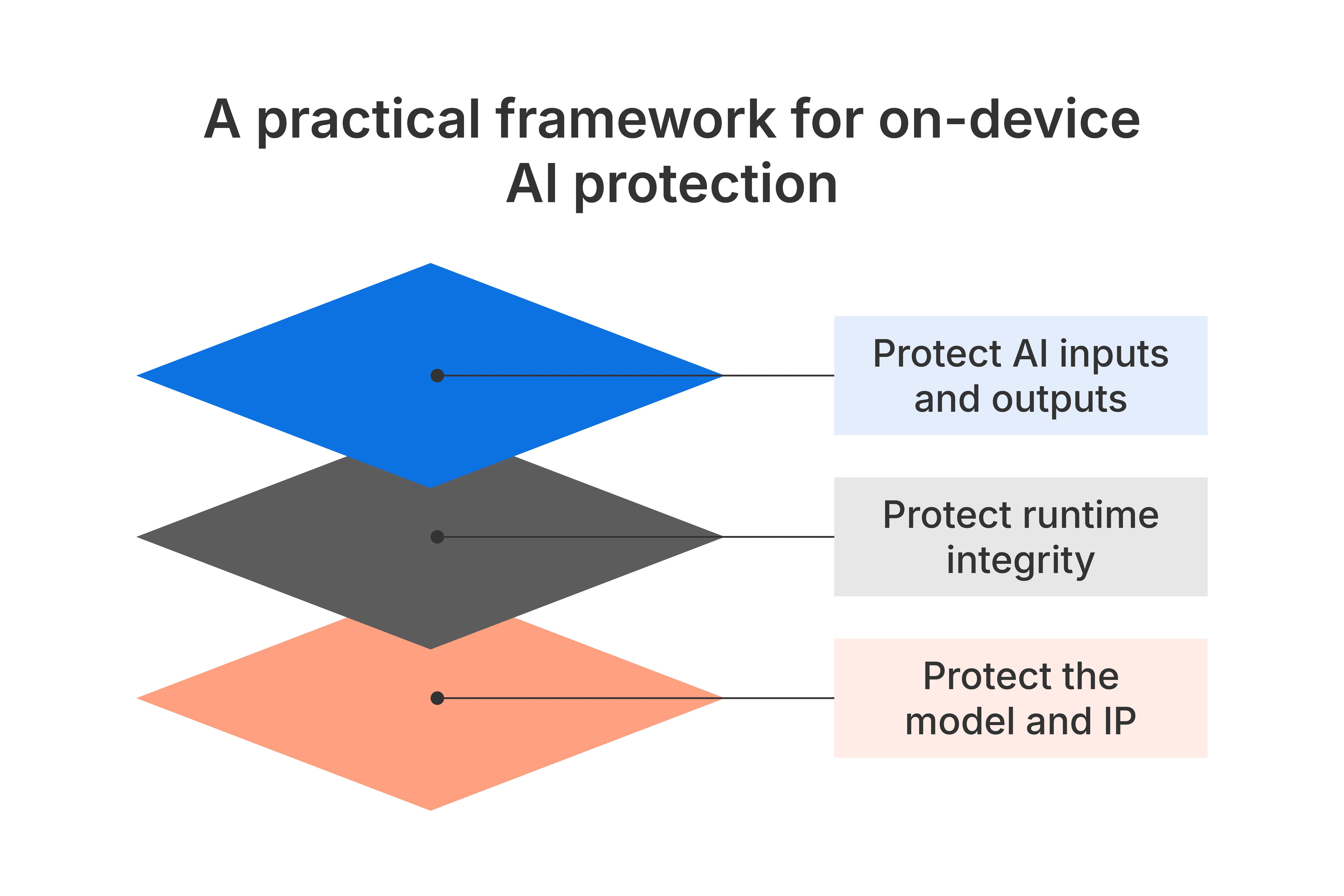
Good protection means layered, embedded application hardening that travels with the app and holds up in a hostile environment.
Protect the model and the IP
Start by making extraction materially harder. That means hardening model assets, protecting prompts, policies, and related logic against reverse engineering. It includes code obfuscation, anti-debugging, anti-analysis, and other embedded protections that raise the cost of inspection, extraction, and theft.
The goal is to make extraction slow, noisy, and unreliable enough that the economics work against the attacker, even one using AI to speed up their work.
Read more: App Threat Report 2026 Q1: The State of Code Obfuscation Against AI
Protect runtime integrity
Next, protect the environment where the AI runs.
That means detecting and responding to tampering, instrumentation, hooking frameworks, modified builds, rooted or jailbroken devices, emulators, bots, and automated abuse through embedded controls such as runtime application self-protection (RASP). It also means ensuring critical controls can't be bypassed quietly at runtime.
For on-device AI, runtime integrity is part of the feature's trust model, not an afterthought.
Protect AI inputs and outputs
The third layer is trust around the interaction with the model. Validate prompt inputs. Protect sensitive data flows. Reduce the chance that malicious inputs can steer the feature off course. Protect outputs from interception or manipulation where those outputs drive downstream decisions or actions.
Not every feature needs the same depth of control. But every team should know which inputs and outputs create real business risk and should be treated as high-trust flows.
Why on-device AI protection matters to adoption
Security is often framed as a drag on delivery. In practice, for on-device AI, it is what makes delivery viable.
Teams need a safe way to split execution between the device and the cloud. They also need confidence that local intelligence won't create blind spots they only find after launch, protection for the IP that makes the feature worth building, and controls against fraud once AI starts touching entitlements, approvals, or transactions.
There is also a trust issue here. Users do not see the line between AI logic and app logic. They only see whether the experience is reliable, safe, and worthy of trust. If an AI-driven feature can be manipulated on-device, that trust can erode fast.
This is why on-device AI protection should be viewed as an enabler. It supports safer hybrid execution, protects differentiated IP, and gives product, engineering, and security teams a stronger basis for rolling out AI features.
Read more: How to protect your AI-driven mobile apps against emerging security threats
Where to start this quarter on mobile AI security
Most teams don't need a big program to get moving. They need a sharper view of where local AI creates exposure today.
-
Inventory what runs on the device. Map local inference, embedded prompts, policy logic, and any device-side decisioning. Separate what runs locally from what stays in the cloud.
-
Mark the outputs that carry business risk. Focus first on flows tied to money, identity, access, or sensitive user data.
-
Define what counts as protected IP. That may be the model, the prompt design, the policy layer, caches, engines, or the way AI output feeds into business logic.
-
Monitor mobile runtime threats already targeting apps. Rooted and jailbroken devices, tampering, instrumentation, hooking frameworks, emulators, bots, and automated abuse should all be in scope.
-
Add in-app protection before broad rollout. Build runtime defenses, model and IP hardening, and safeguards against input manipulation, including prompt injection attacks, into the release plan early.
The key point is to start where the business impact is highest, then expand from there.
The future of on-device GenAI will be shaped in the runtime
On-device GenAI will keep growing because the value proposition is there. The benefits are real, and they all point the same way.
But as more intelligence moves into the mobile app, the attack surface moves with it.
That calls for a security model built for how mobile apps really operate: inside a hostile environment, across a hybrid execution path, with valuable logic embedded close to the user. Teams need protection that treats the model as IP, treats the runtime as contested, and protects the inputs, outputs, and integrity of the app in between.
If the intelligence lives in the app, the protection must live in the app.
Learn more: Secure your AI-powered mobile apps against next-gen attacks