

/compliance-rosette-check.svg)









Your mobile app may refuse to run on a rooted device. An emulator-based attack gets stopped before it can execute. A jailbroken device is denied access to sensitive functionality. In each case, your security controls worked exactly as designed.
Yet when your board asks how many attacks you stopped last quarter, you can't answer. When a fraud analyst investigates a disputed transaction, there's no forensic audit trail. When compliance officers prepare for an audit, they have assertions but no evidence.
Protection worked. But intelligence wasn’t readily available.
The industry's prevention fixation
For years, mobile security has been defined almost exclusively by a single question: Can you prevent the attack?
This focus makes sense. Runtime Application Self-Protection (RASP), code obfuscation, anti-tampering, jailbreak and root detection are essential capabilities. If your app can be trivially manipulated, compromised, or reverse-engineered, nothing else matters. Prevention is foundational, and resilience is required.
But the industry stopped there. Vendors competed on how much they could block, not on what you could learn from what was blocked. Mobile security became a black box: attacks go in, some percentage get stopped, and that's the end of the story. You're told the protection is working, or users complained about crashing apps. Either way, you have no way to verify it, measure it, or learn from it.
This would be unthinkable in web or enterprise security. Imagine running a firewall that never logged anything. A SIEM that couldn't query events. An intrusion detection system that blocked threats but provided no telemetry. The entire SecOps discipline is built on the premise that effective security requires both protection and visibility.
Learn more: Insufficient logging and monitoring
Security controls must be observable to be verifiable. Yes, your mobile security has worked. But without the visibility layer that makes it demonstrable. You need controls that block threats and telemetry that shows what was blocked. Mobile security has excelled at the former while the latter remained underdeveloped, not because protection failed, but because the industry focused there first.
What prevention without intelligence costs you
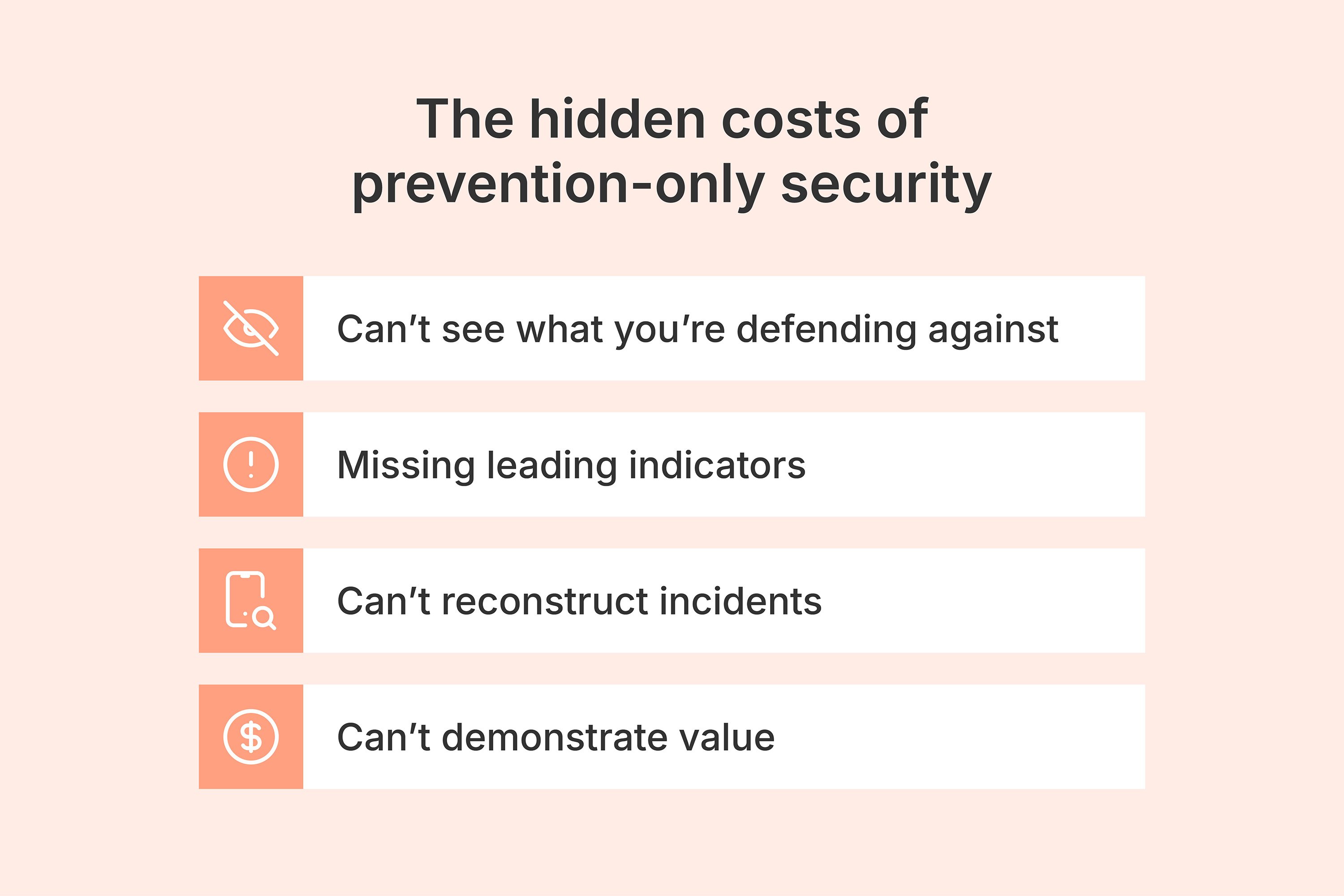
When mobile security stops at prevention, four critical capabilities disappear.
1. No exposure insight
You don't know what you're protecting against. Are rooted devices the primary threat, or is it emulator-based fraud? Are attacks concentrated in specific app versions, geographic regions, or network types? Are threat patterns evolving, or have they been stable for months?
Without telemetry, you're defending against an adversary you can't see. Your threat model remains theoretical rather than validated against reality. You can't prioritize investments, tune controls, or update your assumptions based on actual exposure data.
2. No fraud signal enrichment
Fraud teams operate with incomplete data. A transaction looks suspicious, but you don't know if the device was rooted, if an emulator was involved, or if manipulation tools were active. These are leading indicators, signals that precede fraud losses by hours, days, or weeks. Without them, fraud detection is reactive. By the time losses show up in monthly reports, the window to prevent them has closed.
When telemetry reveals spikes in emulator usage or jailbroken devices that align with fraud patterns, those signals become leading indicators. They can trigger alerts and prevent losses before they show up in monthly reports. But only if you can see them.
3. No forensic traceability
When an incident happens (e.g., a breach, a fraud event, a disputed transaction), you need to reconstruct what occurred. Which devices were involved? What threats were active? What is the timeline?
In web and enterprise environments, this is a standard incident response practice. Logs get pulled. Events are correlated. Investigators build timelines.
But in mobile, most organizations have nothing. Many tools are tailored for web apps, but mobile apps operate differently in terms of architecture, including the mechanisms needed for capturing telemetry. And it’s this telemetry that is critical for visibility and incident response.
So, when a security incident occurs, these organizations have no structured records or severity tagging. There’s no transparent way to prove what happened or rule out what didn't. The war room becomes an exercise in speculation rather than forensic analysis.
4. No ROI proof
Mobile security budgets are under constant scrutiny. Leadership wants to know: Is this investment working? Are threats increasing or decreasing? Where should we spend more? Where can we spend less?
Without telemetry, these questions have no data-driven answers. You're left making the case for mobile security with anecdotes, vendor claims, and assertions. Quarterly reviews become exercises in reassurance rather than strategic planning. Budget conversations are harder because value isn't measurable.
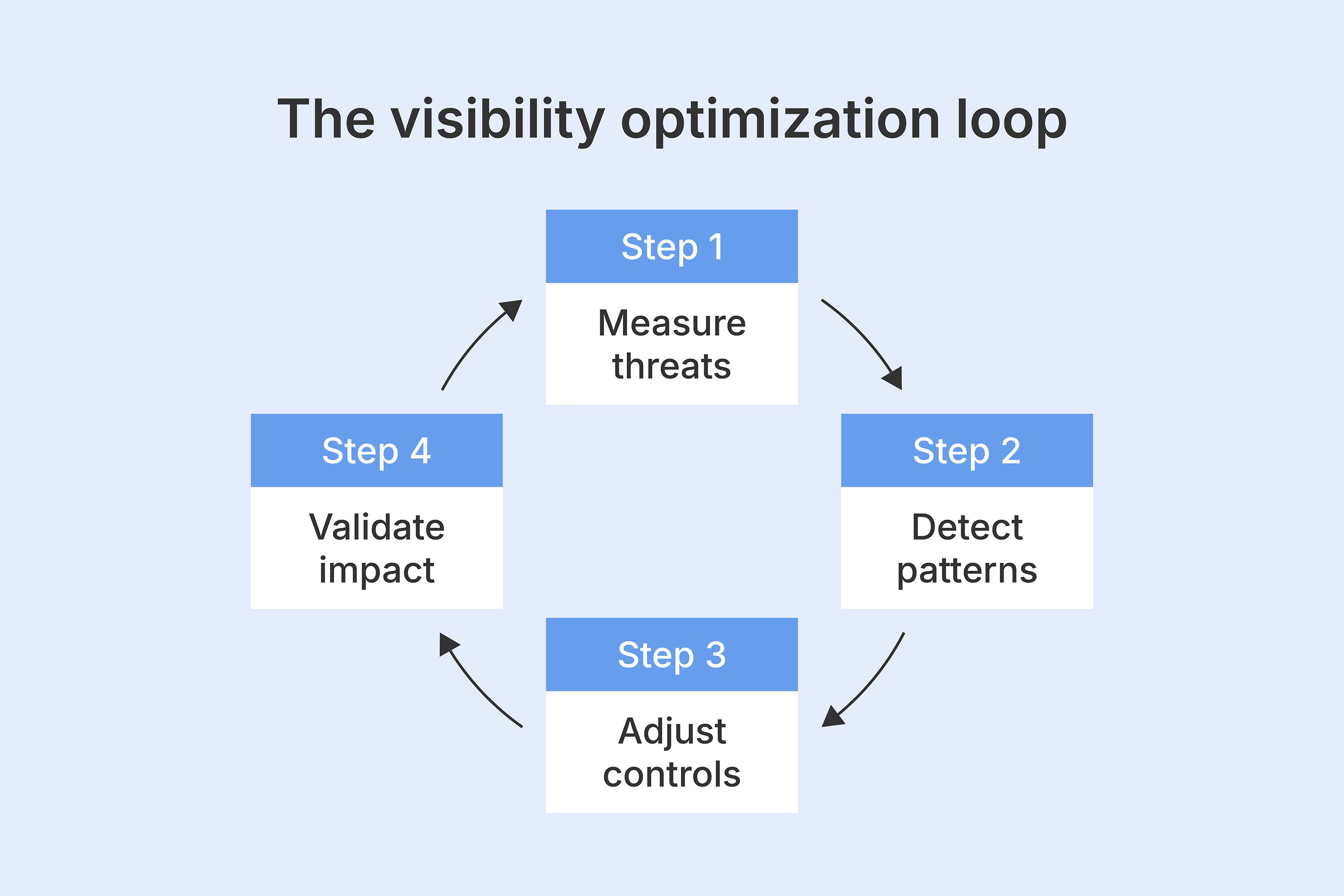
If you can't measure it, you can't optimize it
This principle is foundational in every other domain of technology and business. You measure application performance so you can optimize latency. You measure conversion funnels so you can reduce friction. You measure fraud losses so you can improve controls.
Yet in mobile security, most organizations aren't measuring anything. They've deployed protection, and they're trusting it works. But trust is not a control. Without visibility into what's being blocked, how attack patterns are evolving, or where defenses are holding vs. weakening, optimization is impossible. You're stuck with static defenses in a dynamic threat landscape.
What happens when measurement is possible
Here are some examples of what is only possible if you have visibility.
A sudden spike in emulator detections appears in your dashboard. Your fraud team investigates and discovers a new attack campaign targeting a specific feature. They increase friction for that cohort, and losses never materialize.
A new app version goes live, and your telemetry shows that rooting detections have dropped to near-zero for a subset of devices. Before exploitation happens, you identify that protections silently degraded and issue a patch.
Your board asks whether mobile security investments are working. Instead of anecdotes, you show trendlines: attack volume over six quarters, top threat vectors, geographic concentrations, and measurable risk reduction. Budget approval gets easier because value is quantifiable.
Why mobile telemetry must be trusted
There is a reason mobile security telemetry lags web and enterprise. The source may be compromised.
If a device is rooted, jailbroken, or running in an emulator, any standard analytics SDK on that device is collecting data from an environment the attacker controls. Signals can be suppressed, manipulated, or fabricated. Traditional mobile analytics all share this weakness, such as crash reporters, usage trackers, and even some fraud detection tools. They're collecting telemetry from potentially hostile environments and treating it as trustworthy.
This is why intelligence must be grounded in runtime protection. Telemetry from apps with active runtime integrity protections (e.g., anti-tampering, environment detection, manipulation prevention) is qualitatively different because these apps are threat-aware. When they detect rooting, jailbreaking, or manipulation attempts, they can respond by exiting rather than continuing to operate in a compromised state.
Learn more: Telemetry
This means the telemetry you receive captures real threat events as they occur, not fabricated signals from an app that's been silently subverted. It's not just data. It's data from an app that knew when it was under attack.
The compliance and regulatory imperative
Regulations are accelerating the shift from prevention only to prevention-plus-intelligence.
-
DORA (the Digital Operational Resilience Act) requires financial institutions to report significant ICT incidents, including details on what happened, when, and what controls were in place.
-
PSD2 mandates strong customer authentication and continuous monitoring of transaction risks.
-
GDPR's accountability principle requires organizations to demonstrate that data protection measures are effective, not merely assert it.
-
PCI DSS requires organizations that handle payment card data to track and monitor all access to network resources and cardholder data, with comprehensive logging and regular security testing to detect vulnerabilities.
-
HIPAA's Security Rule mandates audit controls that record and examine activity in systems containing protected health information, requiring covered entities to demonstrate how they protect PHI from unauthorized access.
None of these explicitly mandate mobile threat telemetry. But meeting their evidence and reporting requirements without it is increasingly difficult. They increasingly require structured evidence, such as incident details, control effectiveness, and transaction risk monitoring. Organizations that operate with prevention-only mobile security struggle to produce this evidence when auditors or regulators ask for it.
Intelligence is no longer discretionary. It strongly supports the regulatory evidence requirements.
From protection to intelligence: The execution plan
Shifting from prevention only to prevention-plus-intelligence doesn't require replacing your mobile security stack. It requires recognizing that these are complementary layers, not competing ones.
Start with exposure visibility
If you're currently operating blind, the first step is establishing visibility into the most critical mobile threat vectors: rooted devices, jailbroken environments, and emulator activity. These are high-risk indicators strongly correlated with fraud in many environments. Visibility into them alone provides a foundation you can build on.
Make intelligence actionable, not overwhelming
The goal isn't to generate more alerts for already-buried SOC teams. It's to provide structured, contextual intelligence that enables faster, better decisions. Feed telemetry into your existing SIEM. Create executive dashboards that show trendlines, not noise. Build forensic records that support incident response and compliance reviews. Intelligence should reduce cognitive load, not add to it.
Address privacy by design
One legitimate concern with telemetry is GDPR and data ownership. The solution is architectural: collect non-PII by default. That means device instance IDs that are anonymized, and event metadata that's structured but not personally identifying. Threat signals that are aggregated rather than user-specific. Privacy-conscious telemetry is a design choice, not an oxymoron.
Build incrementally toward full intelligence
Not every organization needs comprehensive mobile threat intelligence on day one. Start with visibility that addresses your most pressing needs: board reporting, incident response, fraud prevention, or compliance evidence. Prove its value, then expand. The infrastructure you build for one use case naturally extends to others.
How Promon transforms protection into intelligence
At Promon, we've built mobile security around a simple principle: protection and intelligence are both essential, and they must work together.
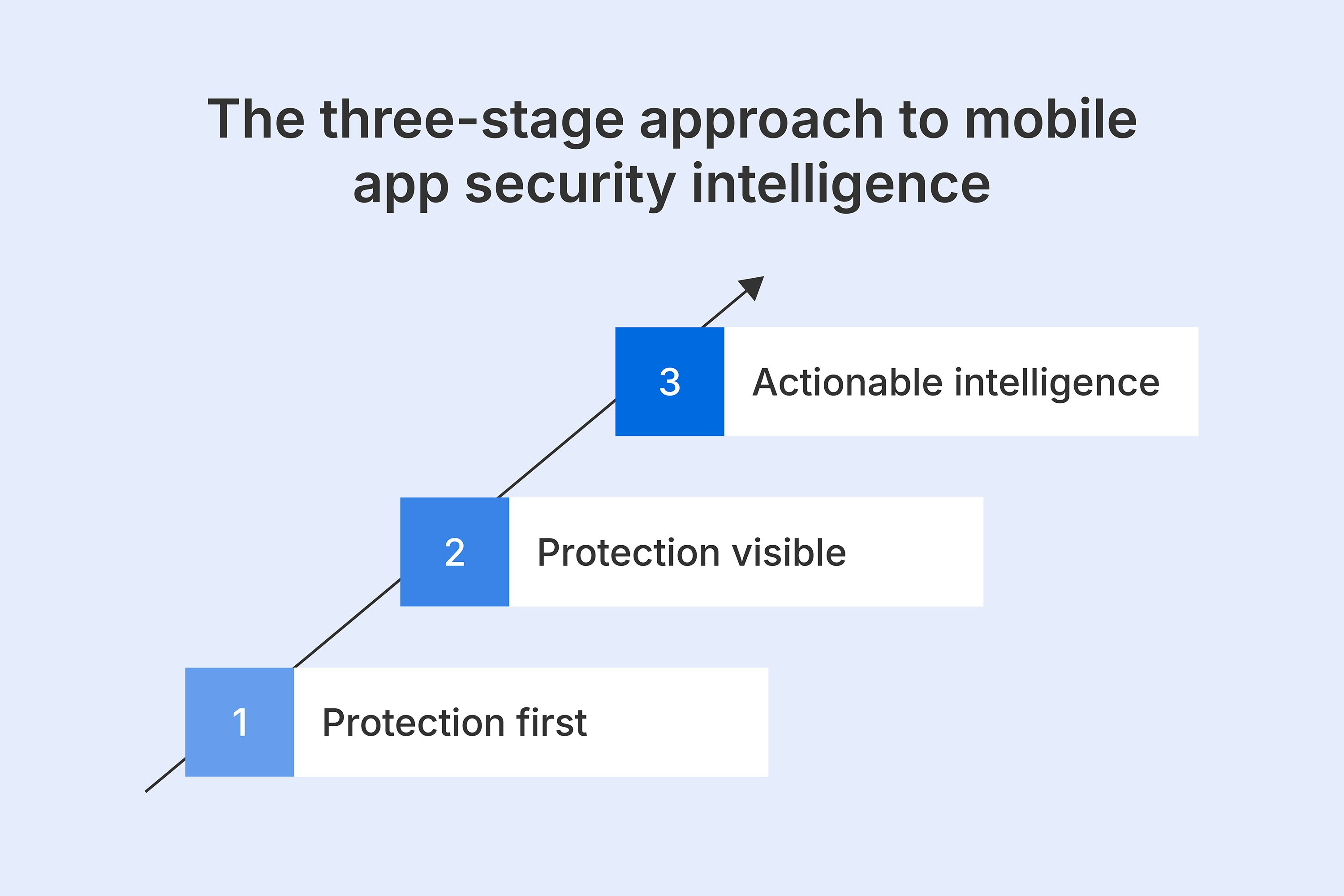
Protection first
Promon Shield for Mobile™ provides runtime protection. It detects and blocks threats like rooting, jailbreaking, tampering, hooking, and emulation. It's the prevention layer, and it's what most mobile security vendors stop at.
But we don't stop there.
Protection visible
Promon Insight for App Visibility™ makes protection measurable. It transforms runtime events (rooting detections, jailbreak attempts, emulator usage) into structured telemetry that you can see, query, and act on. It establishes a mobile risk baseline and gives you visibility into exposure across your user base. For organizations that need to move from 'we're protected' to 'we can prove we're protected,' this is the next step.
Actionable intelligence
Promon Insight for App Security™ converts protection into full-spectrum intelligence. It captures a broader set of threat signals (e.g., hooking, screen readers, debuggers, and repackaging attempts) and makes that telemetry available to your SOC and compliance teams, as well as your SIEM, SOAR, and fraud systems. It's designed for organizations where mobile apps are business-critical and security must be forensically sound, compliance-ready, and continuously optimized.
Together, these capabilities deliver what prevention-only vendors can't: protection you can see, measure, and learn from.
The security posture gap
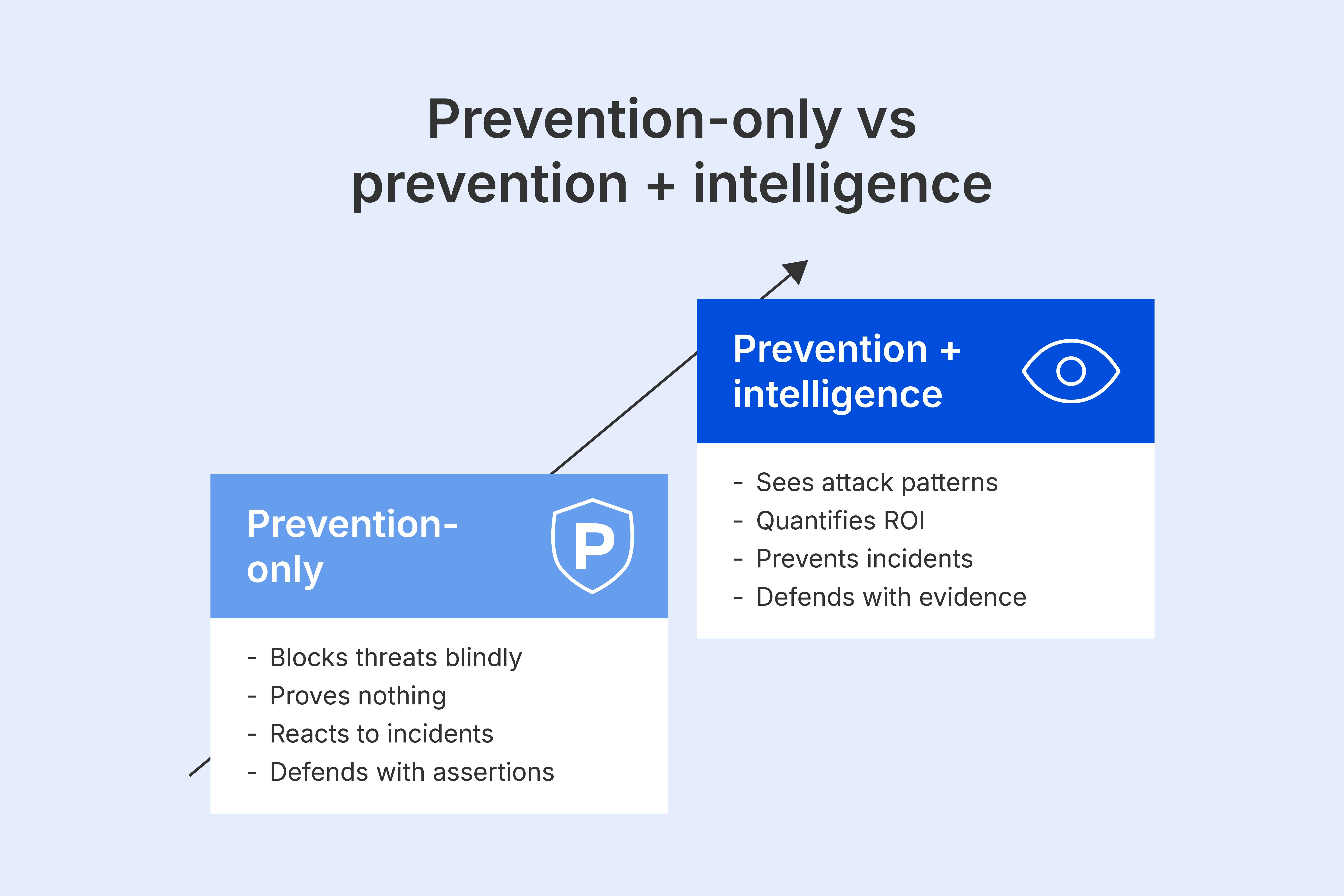
There's a widening gap in security posture between organizations that treat mobile security as prevention only and those that treat it as prevention-plus-intelligence.
The first group operates in the dark. They block threats but can't see patterns. They defend against attacks but can't prove ROI or compliance. They respond to incidents but can't reconstruct what happened. When attackers adapt, they're always playing catch-up. When regulators ask for evidence, they have assertions but no data.
The second group operates with eyes open. They know what threats they're facing and how those threats are evolving. They can prove value to leadership with trendlines, not anecdotes. They detect fraud before it materializes. They pass audits with forensic records, not promises. They optimize defenses based on real exposure data rather than assumptions.
Which group will you be in?
Because attackers aren't standing still. Regulators aren't lowering the bar. And leadership isn't going to accept 'trust us' much longer.
Protection is foundational. But protection is not intelligence. And in 2026, you need both, working together, for you.