

/compliance-rosette-check.svg)









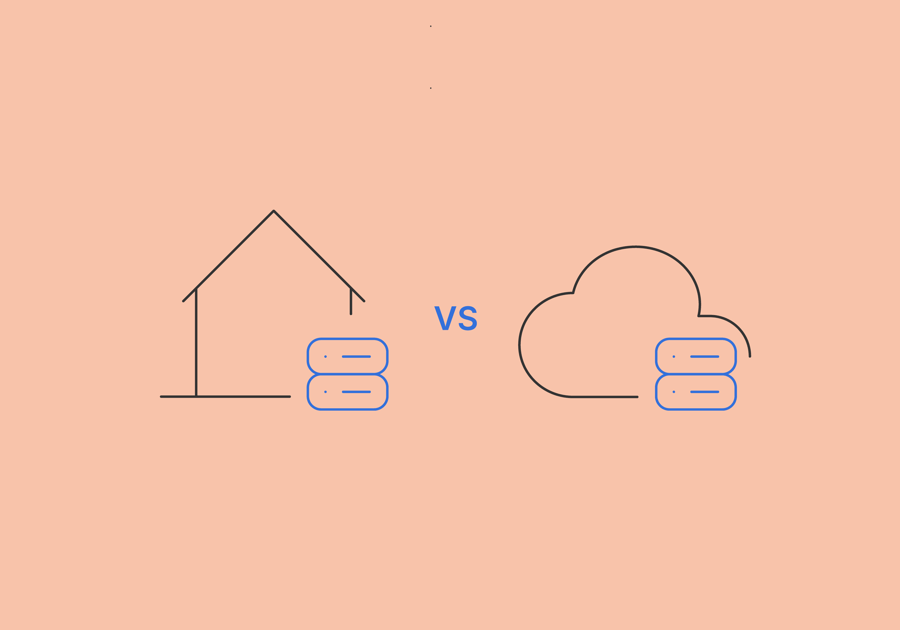
Mobile app protection is not only a security decision. It is an architectural and operational decision that determines how much control, dependency, and friction you introduce into the release path.
On-prem vs cloud deployment is such a decision. The protection capability itself can be identical in both deployment models. What changes is where the protection step executes and what that implies for confidentiality, CI/CD integration, and build throughput.
This guide is designed to help you make that choice deliberately, without treating deployment as a proxy for security strength. The fastest way to align stakeholders is to define your security posture first, then pick the deployment model that fits it.
What remains consistent across deployment methods
Whether the protection platform is delivered as SaaS or deployed on-prem, the underlying techniques are broadly the same class of controls often grouped under application shielding. That typically includes:
-
integrity checks
-
anti-tampering measures
Read more: The ultimate guide to code obfuscation for security professionals
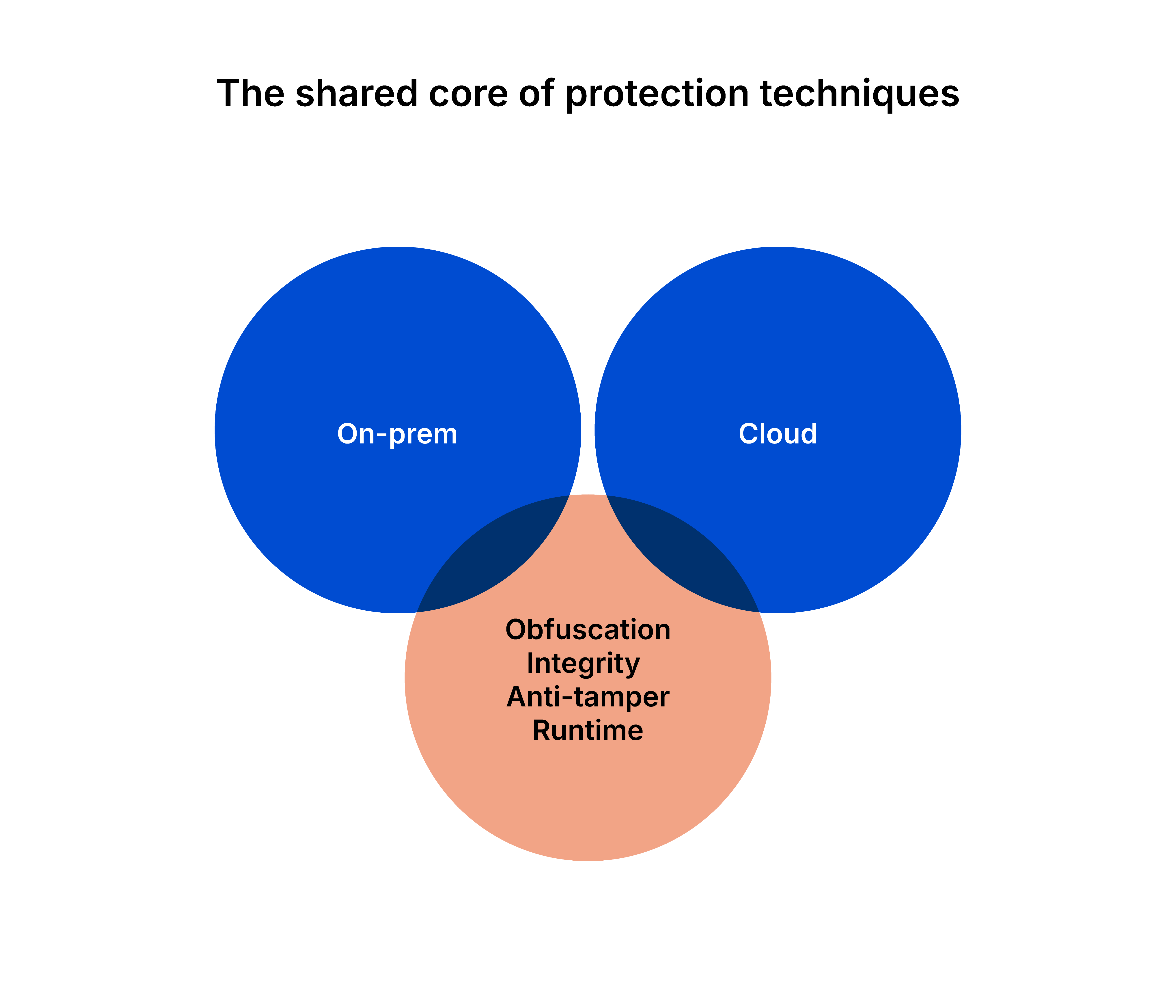
The important point is that cloud and on-prem can deliver the same protection capabilities and security outcomes. This is not a choice between strong and weak security. You are choosing between operating models, execution location, and the dependency profile you are prepared to introduce into the release path.
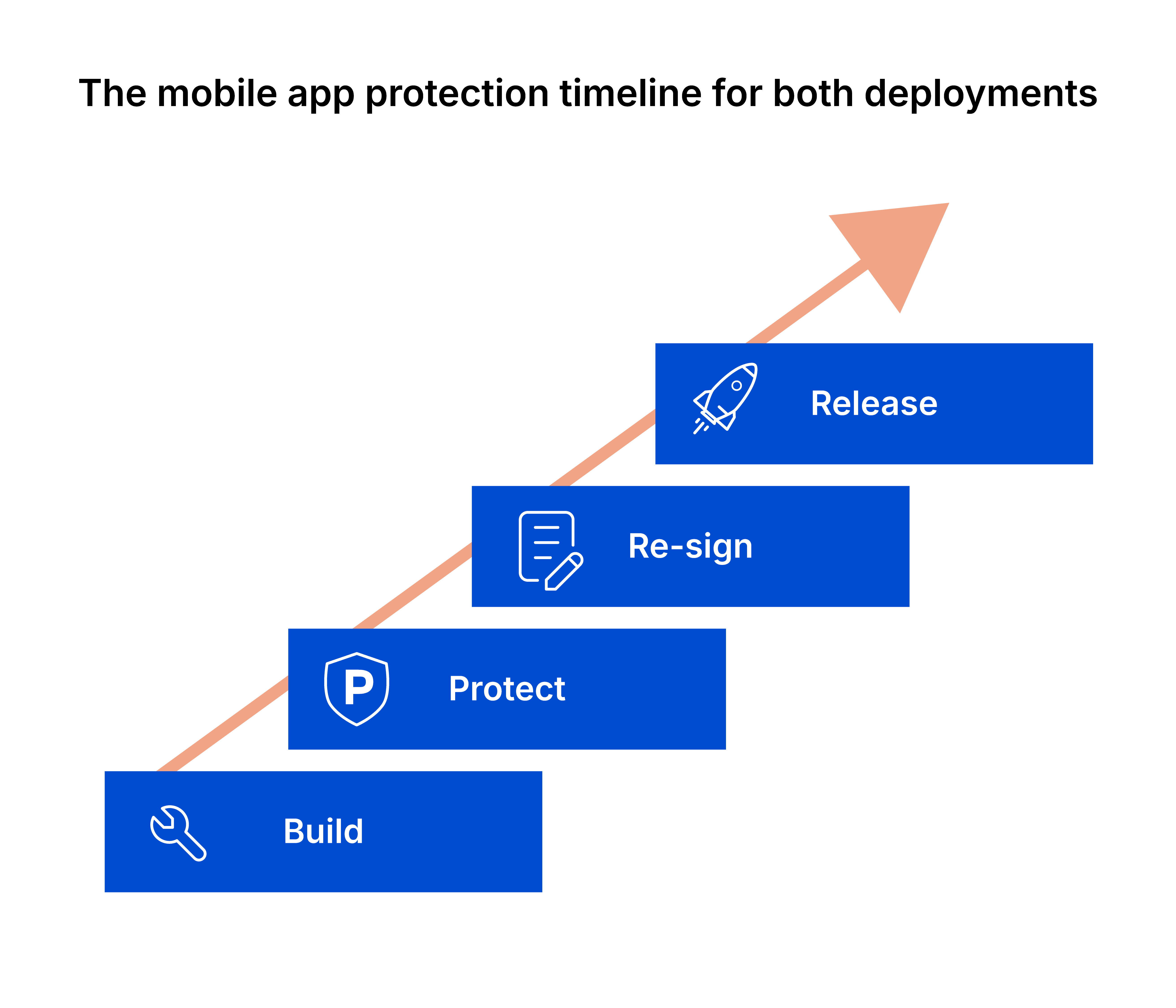
Cloud delivery considerations: operational efficiency and standardization
Cloud delivery is frequently the lowest-effort operating model. It reduces internal platform ownership and shifts routine responsibilities such as upgrades and dependency management to the provider.
For organizations optimizing for speed of adoption and standardized operations, cloud can be an excellent fit, particularly when:
-
the build environment already relies on cloud services
-
governance permits offsite processing
-
teams want consistent configuration across regions and business units
-
internal security engineering capacity is constrained and must be focused elsewhere
None of this alters the security value of the protection itself. It simply reflects a delivery model built for operational efficiency.
The three on-prem advantages that matter the most
On-prem deployment is not inherently superior. It is a pragmatic option that becomes compelling in environments where three priorities dominate: confidentiality, integration, and speed.
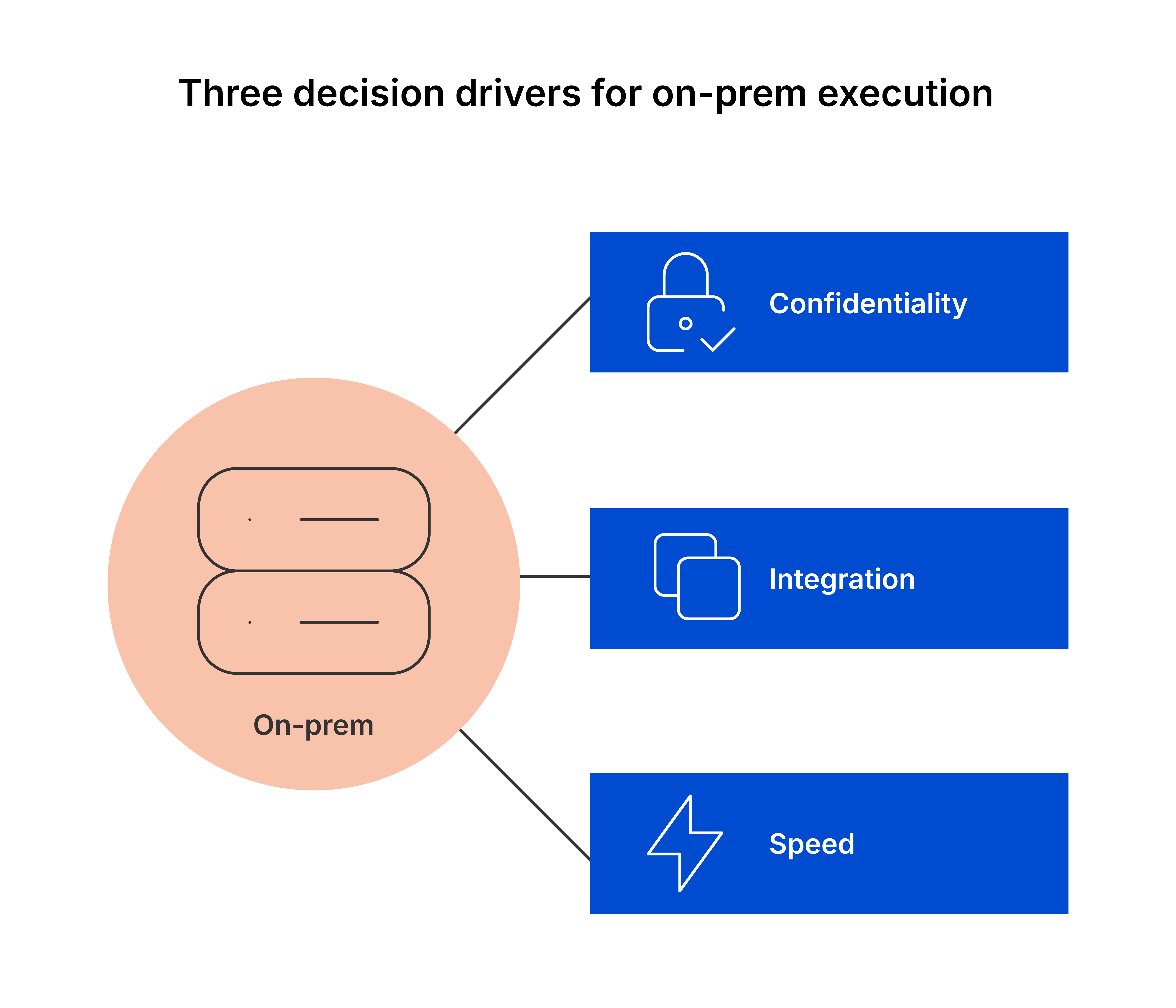
Confidentiality: keeping build artifacts within your control boundary
For many organizations, the app binary is sensitive intellectual property. It contains proprietary logic, security controls, and business-critical workflows. In that context, the build artifact is not a routine file. It is a high-value asset.
If you send an unprotected build artifact to a third party to be protected, you create an exposure window. This is true even when the third party is reputable and trusted. The risk posture changes because the trust boundary expands.
This doesn't mean that failure is assumed on the part of cloud. It does mean that the trust boundary should be made explicit, with risk factors and consequences acknowledged.
Learn more: Data breaches in cloud providers
On-prem deployment avoids that specific trade-off. The protection step executes within your environment, under your access controls, audit policies, and governance constraints. This can also align more naturally with internal requirements around code handling and separation of duties.
When to prioritize for confidentiality
Choose on-prem when your policy posture requires the build artifact to be protected before it leaves your environment, or when internal governance treats the app binary as sensitive IP. This is especially relevant if your controls, audits, and approvals assume the artifact stays within your own access boundary until it is hardened.
Integration: reducing external dependencies inside the CI/CD pipeline
In mature delivery organizations, mobile protection is treated as a pipeline step. A CI/CD pipeline is a sequence of automated operations that transforms code into a signed and releasable build. Protection sits alongside testing, signing, and distribution.
The integration question is not whether cloud can be automated. It can. Many providers offer mechanisms that package a job, transmit it for processing, and retrieve the output without manual steps.
The operational distinction is dependency. If protection requires a round trip to an external service, your release path now depends on:
-
outbound connectivity and routing
-
external service availability
-
cross-boundary transfer of build artifacts
-
the additional failure modes introduced by that transfer
When offsite processing is involved, it is worth understanding how server-side execution is secured and constrained in that environment. In threat modeling terms, this adds an external dependency that may attract its own attack patterns.
Learn more: Cloud-based attacks and Insecure server-side code execution
For teams running local builds or operating in tightly governed environments, keeping the pipeline self-contained can be a design requirement. On-prem deployment supports that by executing the protection step inside the same operational boundary as the rest of the build process.
When to prioritize for integration
Perhaps you require minimal external touchpoints during the build. Then select on-prem when your CI/CD design aims to keep the release path self-contained and strictly determined. This matters most when your pipelines run in constrained networks, or in local build environments where outbound dependencies are tightly controlled.
Speed: improving build throughput by removing transfer overhead
On-prem can improve end-to-end build throughput for a simple reason: it removes upload and download overhead associated with offsite processing.
When you eliminate transfer time, you reduce pipeline latency and increase throughput. Over time, even modest per-build delays compound, especially for teams shipping frequently, running parallel pipelines, or supporting multiple product lines.
This matters because pipeline friction tends to become security friction:
-
longer pipelines reduce iteration speed
-
slow steps invite exceptions
-
exceptions lead to inconsistent coverage
Cloud may still be fast enough for many organizations, and the reduced platform effort can shorten time-to-value. On-prem becomes attractive when low latency in the protection step is a hard requirement.
When to prioritize for speed
Do you want to reduce avoidable pipeline latency? Then choose on-prem when build throughput and release cadence are operational priorities. This becomes more material in high-frequency delivery setups, parallel pipelines, or multi-app portfolios where small delays compound quickly.
A simple choice framework for aligning security, engineering, and compliance
Deployment decisions get easier when you treat them as part of your broader control model, including Zero Trust assumptions about networks and services. Then you can turn them into a short set of explicit criteria that security, engineering, and compliance can agree on. Use these as a baseline.
Read more: Brining Zero Trust to mobile applications
When on-prem tends to fit
On-prem fits best when you require:
- confidentiality posture that keeps unprotected artifacts within your environment
- pipeline designs that minimize external dependencies during build and release
- reduced exposure to transfer-related failure modes in the release path
- improved build throughput by eliminating upload and download overhead
- controlled access boundaries aligned with internal audit and approval processes
- environments where local builds or restricted networks are standard practice
When cloud tends to fit
Cloud fits best when you need:
- reduced operational ownership, including upgrades and dependency management
- faster onboarding for new teams, environments, or regions
- centralized configuration and standardization across multiple pipelines
- governance that permits offsite processing of build artifacts
- predictable cost and resourcing by shifting platform operations to the provider
- organizational preference for managed services in the software delivery toolchain
If different teams or applications operate under different constraints, that’s normal for any portfolio. The goal is to keep the deployment model flexible enough to match the operating context.
FAQs on on-prem vs cloud
It's not usual for teams to get blocked by a main 'on-prem or cloud' decision. More often, blockage occurs by a small set of practical questions. These questions come up in internal reviews because deployment choices shape your security posture and the dependency chain in the release path.
Here are some typical questions with answers to keep the discussion grounded in operational reality.
Can cloud-based mobile app protection provide the same security as on-prem?
Yes. The protection outcome can be the same. The primary difference is execution location and the dependency profile introduced into the build path.
Is on-prem always the better security choice?
Not categorically. On-prem has clear advantages in confidentiality posture, CI/CD dependency control, and build throughput. Cloud enjoys clear advantages in operational efficiency and standardization. The right choice depends on your operating constraints, not on a default deployment stance.
How should we think about risk when build artifacts leave our environment?
Treat it as a trust-boundary decision. If an unprotected artifact must be transferred offsite for processing, your governance model should explicitly accept that exposure window, even if the vendor is trusted and controls are strong.
What should we document internally to make this decision easier?
Capture three items: where builds run, whether offsite processing is permitted for artifacts, and the acceptable dependency level in the release path. Those three inputs usually settle the deployment decision quickly.
Choose an operating model that matches your delivery reality
On-prem and cloud can both deliver robust mobile app protection. The decisive factors are operational, not about the underlying security controls. They come down to confidentiality boundaries, CI/CD dependency design, and pipeline throughput.
The most resilient posture is to treat deployment as a controllable variable in your security architecture. Decide what constraints apply to each app or environment. Then select the execution model that satisfies those constraints without compromising delivery velocity. When you do that, you avoid a common failure mode in security programs: adopting strong controls that teams struggle to operationalize.
Application hardening pays off with maximum impact when it is consistently applied across every release path that ships to users. The deployment model should make that consistency easier to achieve, not more complex and constricted.

_edited.jpg?width=600&name=hero%20(5)_edited.jpg)