Master Android app hacking and security techniques. Learn to identify vulnerabilities, implement robust defenses, and create more secure Android applications.
Review 2024's cybersecurity landscape. Leverage expert predictions, understand emerging threats, and develop strategies to safeguard your digital assets.
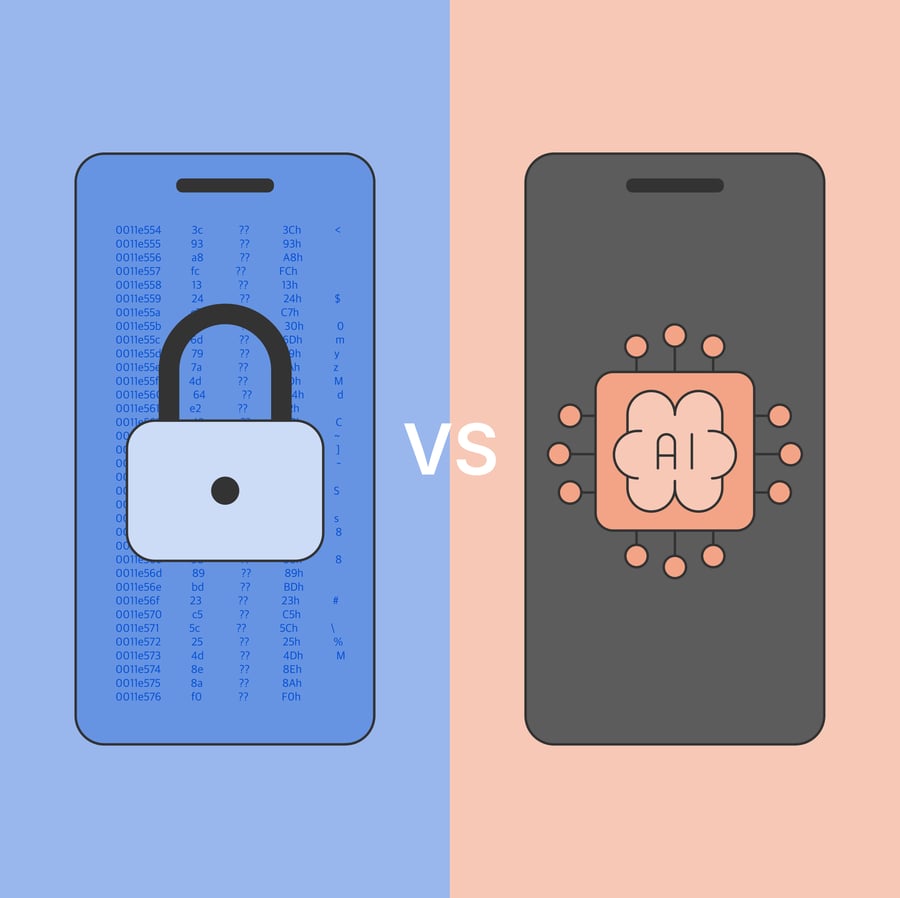
Dispelling the myth: Is iOS more secure than Android?
Debunk iOS vs Android security myths with expert insights. Learn about real-world vulnerabilities, compare platform security, and enhance your mobile app protection.
Understand the StrandHogg 2.0 Android vulnerability. Learn about this serious security threat, protect your apps, and safeguard user data from potential exploits.
Maintain mobile app security compliance by leveraging our comprehensive global legal database, designed to help you stay compliant and secure as your organization expands.
Free
Game
Rapper or Malware?
Test your knowledge! Can you distinguish between rappers and malware names? Boost your app security awareness and brush up on hip-hop trivia.
Code obfuscation is the process of modifying an executable so that it is useless to a hacker while remaining fully functional. The functionality of the code remains unchanged, and code obfuscation helps conceal the logic and purpose of an app’s code. It works through transformations like data, layout, and control flow obfuscation, each targeting different aspects of the code to mask its true structure and logic.
Certificate pinning is a security technique that increases secure communication over the TLS (transport layer security) protocol, like HTTPS. It ties a chosen TLS certificate or public key exclusively to the API server, allowing the application to reliably confirm the server's identity each time it connects. During interactions, the server presents a digital certificate to prove its identity and secures the encryption of data sent through APIs between the client and server. By matching the server’s shown certificate against a predetermined or "pinned" certificate within the app, certificate pinning ensures an additional layer of security, preventing man-in-the-middle (MITM) attacks and ensuring server communication integrity.
Continuous integration and continuous delivery/deployment (CI/CD)
CI/CD stands for continuous integration (CI) and continuous delivery/ continuous deployment (CD). CI/CD automates the process of integrating code changes and deploying them to production environments, ensuring frequent, reliable updates with minimal manual intervention. Continuous delivery takes this further by automating the process of preparing code for release, ensuring it's always in a deployable state. Continuous deployment, an advanced step, automates the release of code to production immediately after passing all tests, without human approval.
Application shielding refers to a set of technologies that modify an application’s source, byte, or binary code, making it more resistant to intrusion, tampering, reverse engineering, and malware attacks. Unlike security solutions that monitor and test vulnerabilities, application shielding can detect and prevent real-time attacks against mobile applications.






























 Compliance
 Compliance
 Mobile app security
 Mobile app security
 FreeDatabaseComing soon
 FreeGame
